
Skateboarding in Hungary has never been just about tricks. It has been about persistence, improvisation, and identity about carving out freedom on cracked pavements long before skate parks, sponsorships, or institutional recognition existed. To understand where Hungarian skateboarding stands today, one must first understand where it came from: a place defined by scarcity, creativity, and quiet resilience.
Author: Szilárd Szélpál
Few people embody this trajectory better than Árpád Tóth – lifelong skateboarder, founder of the Deli Skate Blog and Deli Home Skate Shop, and judge of the Hungarian National Skateboarding Championships. His personal story mirrors the broader evolution of Hungarian skate culture: from improvised beginnings in the early 1990s to its current moment at the intersection of global sport, culture, and policy.
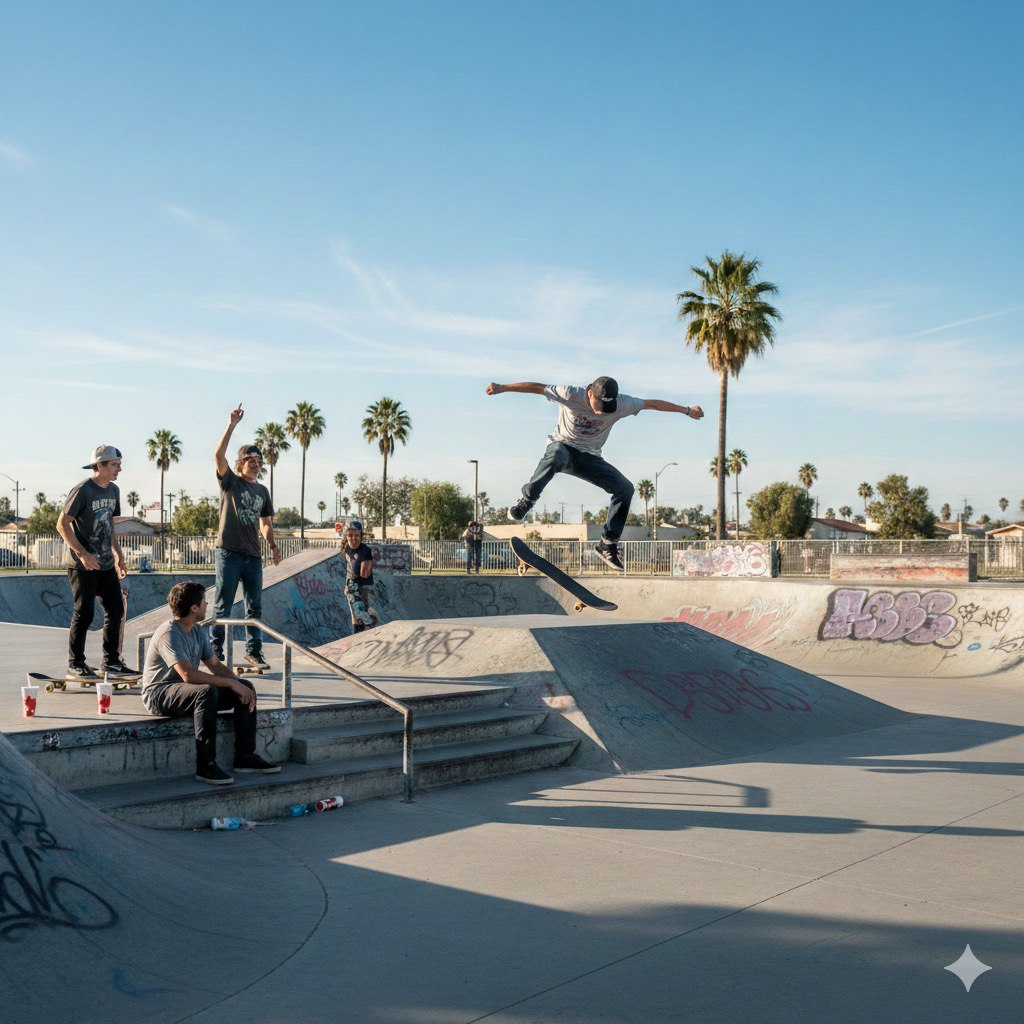
Learning to Skate Without a System
In the early 1990s, skateboarding in Hungary existed almost entirely outside formal structures. Equipment was difficult to obtain, information even harder. American magazines arrived sporadically, VHS tapes circulated endlessly through copying, and most boards available locally were outdated by Western standards. Yet these limitations forced a kind of creativity that defined an entire generation.
For many Hungarian skaters, including Tóth, skateboarding was not introduced through institutions or training programs, but through peer learning, observation, and imitation. What arrived from the United States through worn-out magazines, grainy videos, or the occasional visitor was not only technique, but mindset. Skateboarding was presented as freedom, experimentation, and resistance to uniformity. It was culture before it was sport.
The Golden Era and the Power of Subculture
The early-to-mid 1990s are widely regarded as skateboarding’s “golden era,” a brief but transformative period when equipment, style, and community evolved at remarkable speed. Globally, large brands lost their monopoly, replaced by hundreds of small, skater-driven companies experimenting with shape, size, fashion, and identity. Locally, this period coincided with Hungary’s own cultural opening, giving skateboarding a unique role in youth self-definition.
For Hungarian skaters coming of age at the time, skateboarding became more than a pastime – it became a lens through which music, fashion, and personal values were absorbed. The influence was lasting. Even decades later, many still identify as skaters not because they compete, but because skateboarding shaped how they think, work, and relate to the world.
From Streets to Screens: Documenting a Culture
The launch of the Deli Skate Blog in 2020 marked a new chapter in Hungarian skateboarding not through competition, but through memory and storytelling. Initiated during the COVID lockdown, the project began as a personal commitment to share one skate-related video per day. It quickly evolved into a curated archive connecting Hungarian readers to the global history and roots of skateboarding, particularly its American origins.
The blog’s guiding principle – entertain and educate – reflects a broader shift in how subcultures survive in the digital age. Short contextual explanations, carefully selected content, and an emphasis on value over volume made skate history accessible to new generations who may skate daily but lack connection to the culture’s deeper roots.
This effort was never purely nostalgic. It was an attempt to preserve continuity in a scene increasingly shaped by algorithms, trends, and competition formats.

The Olympic Turn: Opportunity and Tension
When skateboarding debuted as an Olympic sport in 2020, it ignited global debate. Supporters saw recognition, funding, and infrastructure. Critics feared the dilution of skateboarding’s underground spirit. In Hungary, the reality lies somewhere in between.
Government-backed skate park programs have expanded rapidly, national championships are now institutionalized, and Hungary fields a national team. The opening of internationally certified facilities, such as the Budapest Garden International Skate Park signals a level of professionalism previously unimaginable.
Yet the transition is not seamless. Skateboarding has historically thrived as a subculture, while competitive sport requires hierarchy, rules, and conformity. Many Hungarian skaters remain skeptical of competition-based systems, especially when symbolic rewards replace the informal recognition once central to the scene.
The challenge is not whether skateboarding should become a sport – it already has – but whether multiple interpretations of skateboarding can coexist without erasing one another.
Infrastructure, Community, and the Question of Scale
Hungary today stands at a crossroads. Talent exists. Infrastructure is improving. Institutional frameworks are forming. What remains uncertain is scale and cohesion. Unlike some Western European scenes, Hungarian skateboarding is fragmented, shaped by small groups and limited trust across networks.
Yet there are signs of progress. Skate parks increasingly serve not only athletes, but communities revitalizing neighborhoods, attracting tourism, and integrating skating into urban life. International examples, particularly from France, demonstrate how inclusive urban design can transform skateboarding from a “problem” into a civic asset.
For Hungary, the question is not whether to imitate foreign models, but how to adapt them realistically – acknowledging cultural constraints while leveraging geographic position, regional connectivity, and growing institutional legitimacy.
Beyond Sport: Skateboarding as Cultural Capital
Perhaps the most underexplored dimension of Hungarian skateboarding is its export potential not merely as sport, but as culture. Skateboarding carries with it values of persistence, self-education, and creativity that translate far beyond ramps and rails. These traits are already visible in the career paths of former skaters turned entrepreneurs, artists, and community builders.
As Hungary continues to search for authentic cultural narratives that resonate internationally, skateboarding offers something rare: a homegrown subculture with global language, local character, and generational depth.
Holding on to the Core
Skateboarding’s future in Hungary will not be decided by medals alone. It will be shaped by whether the culture can remain inclusive while professionalizing, whether institutions can support without suffocating, and whether the next generation can access not only facilities, but meaning.
As Árpád Tóth puts it, skateboarding has always been layered. Some will chase competition. Others will chase expression. Both paths are valid as long as the core remains intact.
And perhaps that core is simple: showing up, again and again, to push forward on imperfect ground.
For more insights on Central European political risk, EU institutional developments, and transatlantic relations, follow CEA Magazine and the CEA Talk podcast.
Support independent analysis and journalism at CEA Magazine: https://centraleuropeanaffairs.com/donation
Cover photo credit: Gemini

Szilárd Szélpál served as an environmental expert in the European Parliament from 2014, where he utilized his expertise to influence policy-making and promote sustainable practices across Europe. In addition to his environmental work, Szilárd has a deep understanding of foreign affairs, offering strategic advice and contributing to the development of policy initiatives in this field.
